
This guide explains when woven badges for blazers are typically mandatory, when they are optional, and how to order custom designs without mistakes.
When are woven badges for blazers actually required?
Woven badges for blazers are usually “required” when a uniform policy, event rule, or membership standard says so. In practice, that requirement most often comes from schools, governing bodies, and event organisers that want immediate visual identification.
Common scenarios include: school uniforms, prefect or leadership blazers, sports teams representing an institution, competition attire, hospitality or concierge blazers, and official club dress codes. When a policy is written, suppliers and wearers have less room for variation, so woven badges for blazers become the simplest compliance tool.
Which organisations most often mandate them?
Schools and youth organisations lead the list, especially where uniforms are audited. Sports clubs and associations also mandate badges for match days, awards nights, and formal travel uniforms.
Heritage groups, marching bands, and ceremonial teams frequently require a specific crest placement and size. Corporate settings sometimes require them for front-of-house roles, particularly where security, brand clarity, or guest confidence matters. In all these cases, woven badges for blazers act as a clear, consistent “marker” that aligns with the organisation’s rules.
When are woven badges for blazers optional but still worth doing?
They are optional when there is no written uniform requirement, or when the blazer is used more like smart-casual branding. Even then, woven badges for blazers can still be worth it because they look intentional, last well, and avoid the “temporary” feel of stickers or printed patches.
They are also useful for alumni groups, one-off events, staff recognition, sponsor visibility, and limited edition runs. When an organisation expects photos, press, or public appearances, woven badges for blazers can improve the overall impression without changing the garment itself.
What makes woven badges for blazers a better fit than other badge types?
Woven badges for blazers suit formalwear because they handle small text and fine linework cleanly, and they typically sit flatter than bulky embroidery. Woven construction uses thread woven into the design, which helps produce crisp edges and readable details.
They are often chosen for crests, shields, initials, and institutional logos where accuracy matters. For blazers that are worn regularly, woven badges for blazers also tend to hold shape and colour well, which helps maintain a consistent uniform look over time.
What details should they decide before ordering?
Before ordering woven badges for blazers, they should lock down five decisions: size, placement, border finish, backing type, and colour matching. Skipping any of these can lead to reorders or inconsistent batches.
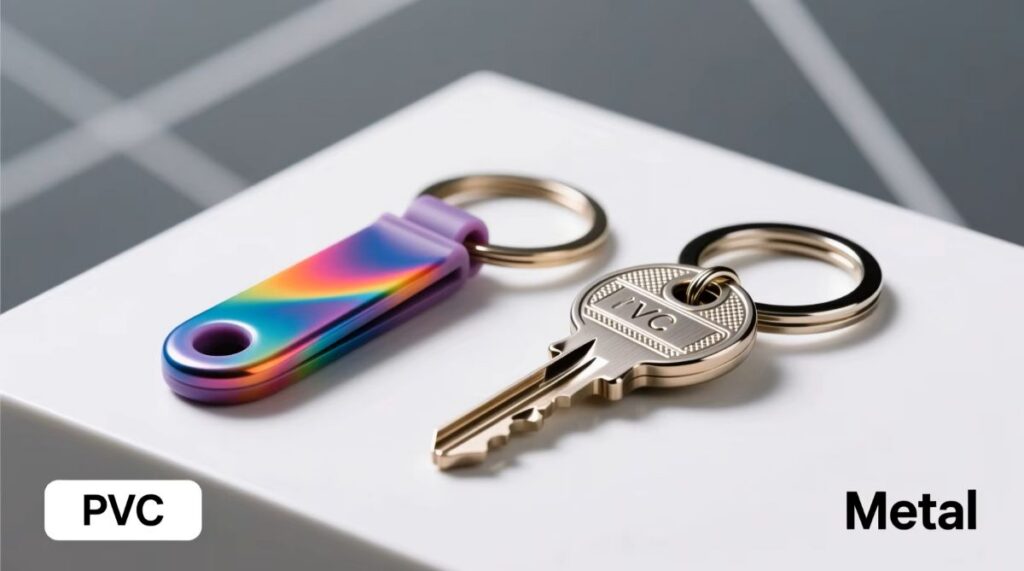
They should also confirm whether the design needs metallic thread effects, whether small text is essential, and how the badge will be attached to different blazer fabrics. If more than one blazer supplier is involved, woven badges for blazers should be specified by exact dimensions, not “small/medium/large.” Check out more about Custom Keyrings for Events and Branding: Material Options Compared.
How do they choose the right attachment method for blazers?
The attachment method affects both appearance and long-term durability. Sew-on is the most traditional choice and often the most secure for woven badges for blazers, especially for school and club use.
Iron-on can work, but blazer fabrics and linings vary, so heat application is not always ideal. Velcro is useful when badges must be removed for washing, role changes, or swapping between teams, but it can add thickness. For formal uniform consistency, many organisations default to sew-on woven badges for blazers to minimise movement and lifting at the edges.
How do they order custom designs without wasting time or money?
To order woven badges for blazers efficiently, they should start with clean artwork and clear specifications. A supplier typically needs a vector file (AI, EPS, PDF) or a high-resolution image, plus exact size and colour references.
They should request a digital proof, check spelling and proportions, and confirm border and backing choices in writing. If the badges are for a uniform policy, they should order a pre-production sample first. For repeatability, they should ask the supplier to store the production file so future woven badges for blazers match the original batch.
What is a practical checklist they can follow before approving production?
Before approving woven badges for blazers, they should confirm:
- The final size in millimetres or inches
- Placement guidance (left chest, pocket centre, etc.)
- Border type (merrowed, heat-cut)
- Backing (sew-on, iron-on, Velcro)
- Thread colours and closest Pantone matches
- Readability of small text at real size
- Turnaround time, shipping method, and reorder terms
A short checklist like this prevents the most common problems: wrong sizing, unreadable text, and mismatched colours. It also helps ensure woven badges for blazers arrive ready to apply, with no last-minute surprises.
See Also : Care labelling for clothing and textiles mandatory standard