
They should pick the material first, then the shape, then the print method. That order prevents most quality issues with custom keyrings for events and branding.
What should they consider before choosing a material?
They should match the material to how and where the item will be used. If it will live on a car key, it needs abrasion resistance; if it will be a conference giveaway, it needs visual impact and speed of production.
They should also decide what matters most: lowest unit cost, premium feel, eco positioning, or fine-detail branding. Those priorities will point to the right custom keyrings for events and branding option quickly.
Which material feels most premium for corporate gifting?
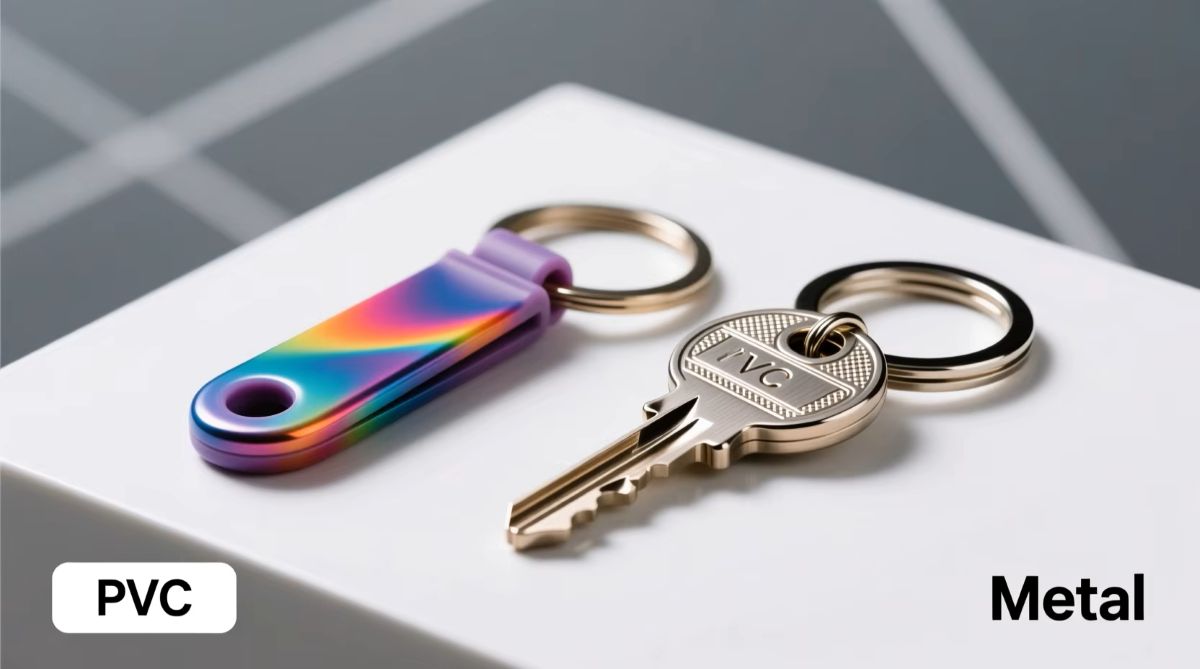
Metal tends to feel the most premium in the hand. It has weight, resists scratches, and pairs well with minimal, high-contrast branding like engraving or enamel fills.
For executive kits, partner gifts, or VIP tickets, metal custom keyrings for events and branding usually communicate “quality” without needing extra packaging.
Which material is best for bold color and creative shapes?
PVC and acrylic are strong choices for bright color, playful shapes, and high-visibility logos. PVC suits soft, rubbery designs with strong color blocks, while acrylic delivers crisp edges and a glossy finish.
For launches, pop-ups, student events, and merch-style drops, these custom keyrings for events and branding options are easy to make memorable.
Which material offers the best print detail for logos and QR codes?
Acrylic and metal generally hold fine detail best. Acrylic supports sharp full-color printing, while metal supports precise laser engraving and clean linework.
If they need small type, QR codes, or intricate marks that must scan reliably, they should avoid overly textured surfaces and choose custom keyrings for events and branding materials built for precision.
Which material is most durable for everyday use?
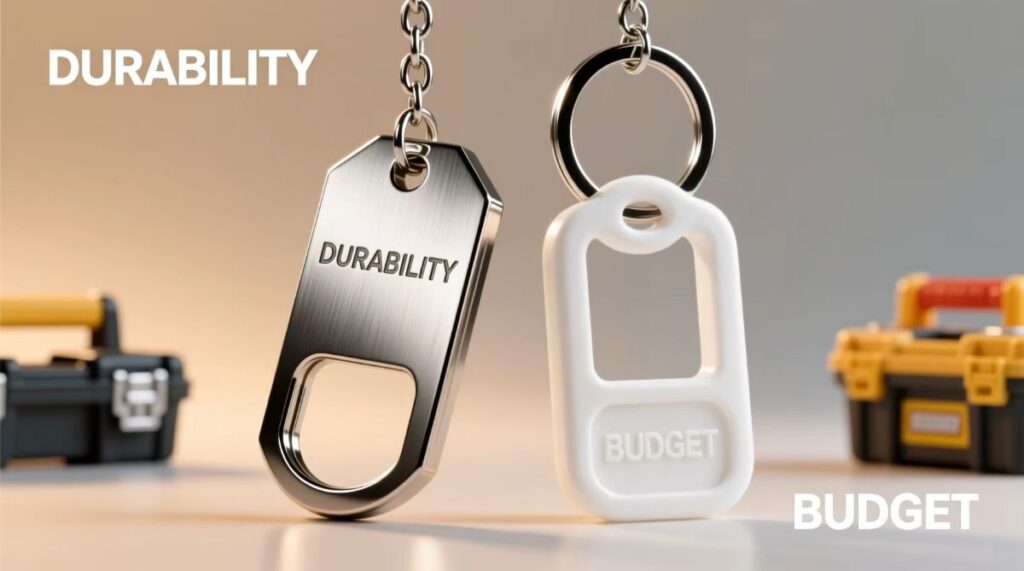
Metal is typically the most durable, followed by thicker acrylic. PVC can last well too, but thin designs may stretch or tear at stress points if the ring attachment is weak.
They should also pay attention to the hardware: split rings, clasps, and swivels often fail before the body does. Durable custom keyrings for events and branding depend on durable fittings.
Which material is best for low-cost mass giveaways?
PVC, basic acrylic, and simple plastic variants usually win on price at scale. They are lightweight, ship cheaply, and can be produced quickly when designs are simple.
For large crowds, they can keep costs down by limiting colors, avoiding complex attachments, and choosing proven custom keyrings for events and branding formats.
Which material supports an eco-friendly brand message?
Wood, bamboo, cork, and recycled plastics are common “eco” signals. They can look authentic, but they also require careful sourcing and clear messaging to avoid greenwashing.
They should ask suppliers for material specs and certifications where possible. Done right, eco-focused custom keyrings for events and branding can reinforce sustainability goals without sacrificing style.
Other Resources : Australian Government Branding Guidelines | PM&C
How do common materials compare side by side?
They can use a quick comparison to narrow choices:
- Metal: Premium feel, highly durable, great for engraving; higher unit cost and heavier shipping.
- Acrylic: Sharp printing, glossy look, flexible shapes; can scratch if unprotected.
- PVC (soft rubber): Bold colors, tactile, fun; fine detail can be harder, thickness matters.
- Wood/Bamboo: Natural look, eco positioning; grain affects print consistency.
- Leather/PU: Gift-ready feel, classic style; needs good edge finishing and stitching.
- Resin/Epoxy domed: High shine and depth; can yellow over time if low quality.
This helps them choose custom keyrings for events and branding that fit both budget and brand tone.
What branding methods work best on each material?
They should match decoration to surface:
- Metal: Laser engraving, debossing, enamel.
- Acrylic: UV printing, screen printing, layered acrylic.
- PVC: Molded color fills, printed details, raised logos.
- Wood/Bamboo: Laser engraving, selective printing.
- Leather/PU: Debossing, foil stamping, stitched patches.
When decoration and material align, custom keyrings for events and branding look intentional rather than “promo.”
How can they avoid common quality mistakes?
They should request a pre-production proof and, if timing allows, a physical sample. Most problems come from incorrect color expectations, weak attachment points, or choosing detail-heavy art for a low-detail process.
They should also specify thickness, edge finishing, and hardware type in writing. Clear specs reduce rework and protect the final custom keyrings for events and branding outcome.
Which material should they choose for different event types?
They can map material to scenario:
- Trade shows: Acrylic or PVC for impact and cost control.
- Corporate events: Metal or leather/PU for a premium cue.
- Festivals: PVC for color and durability in rough conditions.
- Charity runs: Acrylic or recycled plastic for light shipping and bright branding.
- Hotels and venues: Metal for longevity and daily handling.
This keeps custom keyrings for events and branding aligned with the setting and audience.
What is the simplest way to decide quickly?
They should pick one goal and optimize around it. If the goal is “premium,” choose metal; if it is “bright and fun,” choose PVC; if it is “sharp print,” choose acrylic; if it is “eco,” choose wood or recycled plastic.
Once they decide the goal, the right custom keyrings for events and branding material becomes obvious, and the rest is just dialing in size, artwork, and hardware.
Related : Woven Badges for Blazers: When They’re Required and How to Order Custom Designs